DiverInterCom KCore Scuba · Tec · Rec · Zen
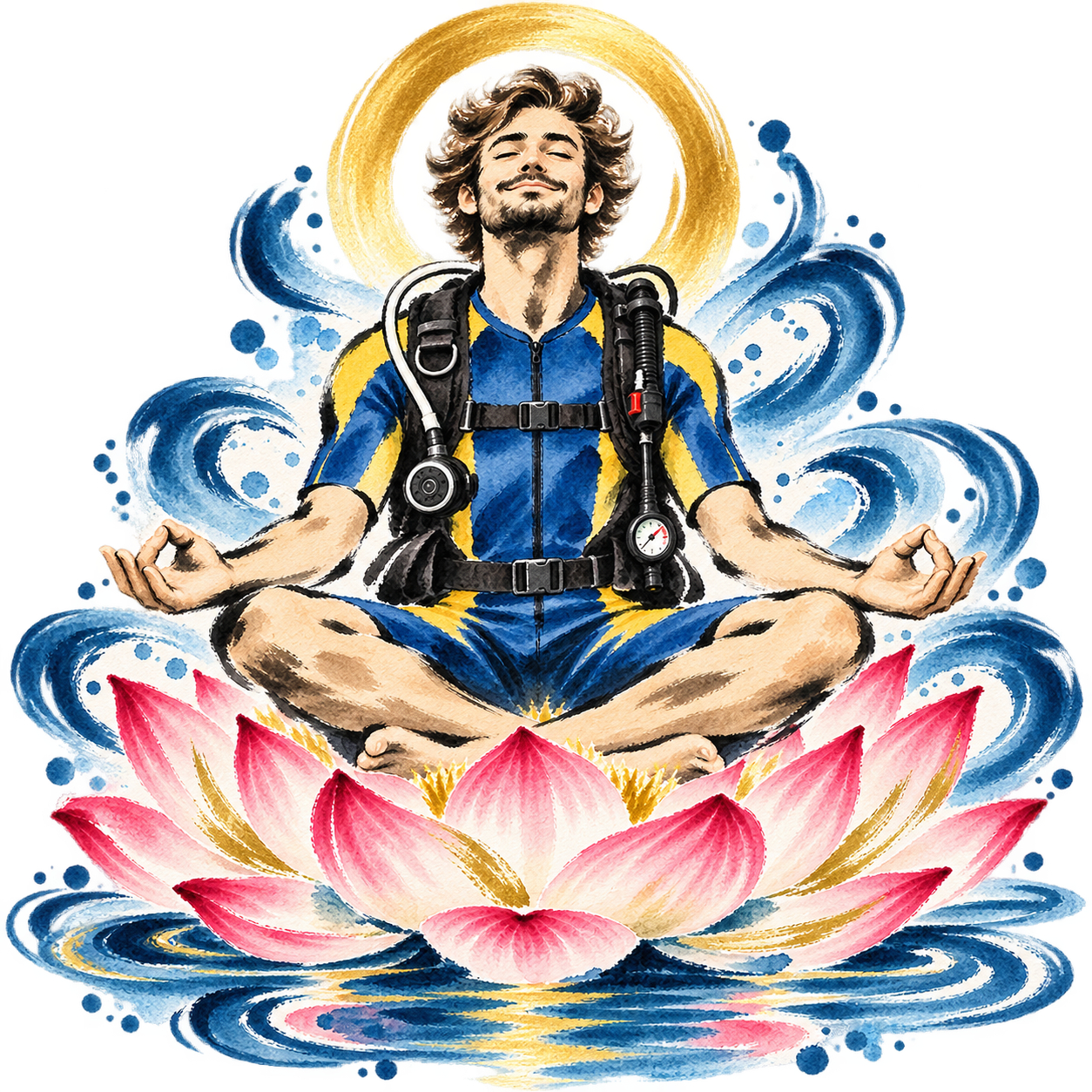
Zen Dive
Breathe. Float. Observe.
Zen Dive is not a new certification, a special equipment configuration, or another collection of rules. It is a way of approaching a dive.
“Go out and find yourself, and let the water find you!”
by Chris K
“Introducing Zen Dive, thats the eqivalent of Apnea to Scuba !”
Zen Dive — Breathe. Float. Observe.
Zen Dive is not a new certification, a special equipment configuration, or another collection of rules. It is a way of approaching a dive.
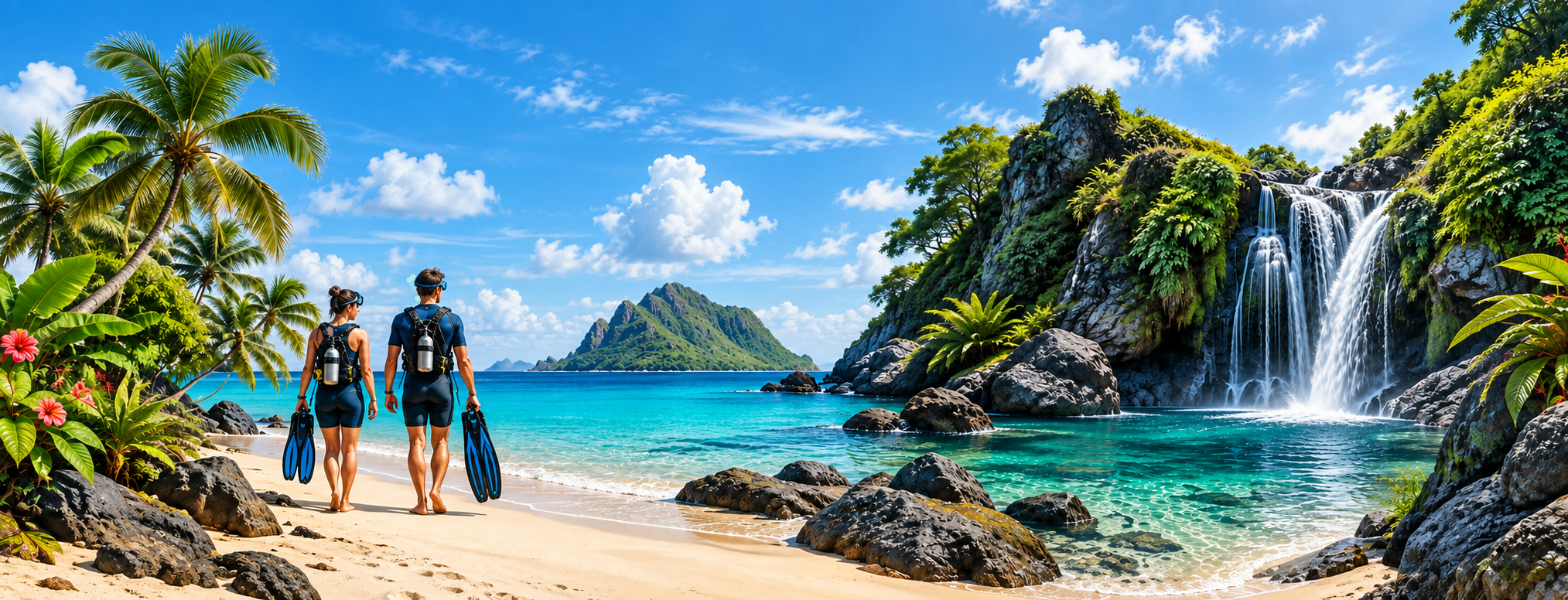
You can Zen Dive almost anywhere: in the ocean, a lake, a river, a quiet pond, or a clear waterfall pool. You can do it with different equipment configurations and in many environments. But the original idea is deliberately simple: light equipment, shallow water, little effort, little disturbance, and plenty of time.
The preparation for a Zen Dive should be just as serious as the preparation for a demanding dive. Equipment is assembled slowly and carefully. Gas, regulator, buoyancy system, gauges, weighting and the complete dive setup are checked with full attention. There is no rush. The calmness of the dive begins before entering the water.
Whenever conditions allow, the equipment can be minimalist. A rash guard or shorty in warm water. A small cylinder instead of a heavy back-mounted tank — perhaps even a compact 3-litre cylinder where the planned dive, gas reserve and local requirements make that appropriate. A proper BCD or minimalist backplate-and-wing, a normal regulator system with alternate second stage, inflator and SPG, and whatever mask and fins you are most comfortable with.
Nothing exotic is required.
The objective is equally simple:
Breathe. Float. Observe.
Enter the water and slow everything down.
Move slowly. Let the water carry you instead of constantly fighting it. Establish neutral buoyancy and experience one of the most beautiful aspects of diving: three-dimensional weightlessness.
Do not hurry toward anything.
Do not chase the fish.
Do not constantly search for the next attraction.
Stay where you are. Feel the water. Watch what happens around you.
Clear your mind and concentrate on your position in the water, your breathing, your movements and the life surrounding you. Become a quiet observer rather than something moving through the environment demanding attention.
And something interesting often happens.
When the diver becomes quiet, animals sometimes become curious.
Small fish come closer. Creatures that normally disappear may remain where they are. Instead of pursuing nature, you give nature the opportunity to approach you.
Breathing becomes slow and relaxed as your workload falls. The objective is not to hold your breath or deliberately skip breaths. Scuba breathing remains continuous and natural. The reduction in gas consumption comes from relaxation, good buoyancy, efficient movement, fitness and experience—not from restricting ventilation.
This is where Zen Dive touches both recreational scuba and the feeling many divers know from apnea diving: quietness, economy of movement, awareness of the body, and the sensation of belonging in the water rather than merely visiting it.
The preferred environment is therefore usually shallow.
Perhaps 3 to 10 metres, where sunlight still reaches the bottom, colours remain alive, plants and animals are often abundant, and there is no reason to descend simply because greater depth is available.
A skilled, relaxed diver may be surprised how little gas is actually required when almost no physical work is being done. Twenty or thirty minutes can pass almost unnoticed.
But there is one thing that must never disappear into the meditation:
check your gas.
Zen does not replace normal diving discipline. Gas reserve, buddy procedures where applicable, depth, time, conditions, thermal protection and safe ascent practices still matter. Calmness works because the fundamentals have already been taken care of.
Then comes perhaps the best part.
You rise slowly toward the surface.
There is no mountain of equipment to drag away. No feeling that you have just completed an expedition. You climb out of the water, sit somewhere warm in the sun, and for a few minutes there may be nothing that needs to be done.
You breathe.
You feel alive.
You feel the quiet satisfaction that sometimes comes after a very simple dive.
And perhaps, during those few silent minutes underwater, maybe you made a few new friends.
Zen Dive.
“give nature the opportunity to approach you”